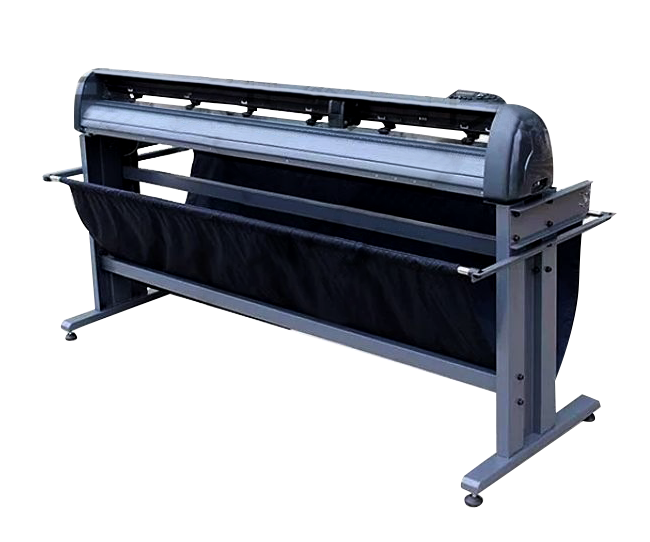
In the automotive detailing industry, the method of cutting protective films (PPF) and car wraps significantly impacts both the quality of the application and the overall customer experience. Choosing between manual and machine cutting is a critical decision for car owners and technicians. Below is a comparison of the two methods and why machine cutting is the superior choice.
1. Characteristics of Manual Cutting
Advantages:
-
Flexibility: Manual cutting is ideal for unique vehicles or highly customized requests, allowing on-the-spot adjustments.
-
Low Initial Investment: Manual cutting requires only basic tools, eliminating the need for costly equipment.
Disadvantages:
-
Lower Precision: Manual cutting relies on the technician’s skills, making it difficult to achieve millimeter-level precision, which may result in uneven film edges.
-
Time-Consuming: Measuring, marking, and cutting manually take significantly more time, especially for large-scale projects.
-
Risk of Paint Damage: Cutting directly on the vehicle surface increases the chance of blade marks on the paint.
-
Material Wastage: It is harder to optimize material usage with manual cutting, leading to higher costs.
2. Characteristics of Machine Cutting
Advantages:
-
High Precision: Machine cutting uses pre-designed digital templates, ensuring millimeter-level accuracy for perfect alignment with vehicle surfaces.
-
Efficiency: With professional pre-cut software like PROTEXA Tech’s Pre-Cut Software, machines can handle bulk orders swiftly.
-
Paint Protection: Machine cutting operates off-vehicle, eliminating the risk of blade scratches.
-
Material Optimization: Digital templates maximize material usage, reducing waste.
-
Consistency: Each cut piece is identical, avoiding quality variations caused by human error.
Disadvantages:
-
Higher Initial Cost: Investing in cutting equipment and software can be expensive initially, though it reduces costs in the long run.
-
Dependency on Technology: Proper operation requires expertise in handling the equipment and software.
3. Applications of Machine Cutting
-
Automotive Paint Protection Films (PPF): High-precision cuts are essential for luxury vehicles to protect paint surfaces.
-
Car Wraps: Large-scale wrap applications require seamless cuts for a flawless finish.
-
Window Tint Films: Machine cutting ensures perfect fitment for various car models’ windows.
-
Electronic Device Films: Protecting gadgets like phones, watches, and tablets demands precise cutting for their surfaces.
4. Why Choose Machine Cutting?
Machine cutting combines advanced technology with pre-cut software to enhance efficiency and precision. It significantly improves installation quality, reduces material waste, and ensures customer satisfaction. For detail-oriented and high-standard services, machine cutting is the professional’s choice.
Using solutions like PROTEXA Tech’s Pre-Cut Software with cutting plotters enables seamless cutting for various applications, from automotive exteriors to interiors.
5. Conclusion
While manual cutting has its advantages, advancements in technology have made machine cutting the industry standard. It not only improves operational efficiency but also minimizes material waste and installation risks, making it a worthwhile investment for every professional film application studio.
Why pre-cut production is the smart choice for film application
The smart choice for film application is the method that protects the vehicle, reduces installation variability, and creates a repeatable customer experience. Pre-cut software provides that structure: technicians select verified patterns, apply approved edge settings, nest parts efficiently, and send a defined job to the plotter before the film touches the vehicle.
Manual cutting versus pre-cut workflow
| Factor | Manual cutting | Pre-cut software workflow |
|---|---|---|
| Vehicle safety | Higher risk when knives work near painted surfaces | Cutting is completed before installation |
| Consistency | Depends heavily on each installer | Standardized patterns and settings |
| Labor time | Slower tracing and cutting on the vehicle | Faster preparation and plotting |
| Material yield | More offcuts and improvised sections | Nesting and roll-width planning improve yield |
| Customer perception | Often appears craft-only | Supports a technology-driven professional process |
How to implement pre-cut production
- Audit current jobs. Record manual cutting time, material waste, rework, and customer complaints for one month.
- Select software access. Start with the Trial Version, then choose Professional Plus or a Business License based on volume.
- Standardize film presets. Create separate settings for PPF, tint, vinyl, and specialty films.
- Train the workflow. Teach pattern search, edge control, nesting, output, inspection, and installation handoff.
- Measure the result. Compare labor hours, film use, rework, and review scores against the manual baseline.
Quality controls that protect the result
- Inspect plotted panels: check for incomplete cuts, corner drag, or shifted material before installation.
- Verify edge placement: confirm whether edges finish behind trim, below moldings, or visible according to the agreed standard.
- Control contamination: plotting and installation areas require separate cleanliness standards.
- Log blade changes: old blades often create drag that is mistaken for a software issue.
- Use repeat kits: save approved panel groups for vehicle families your shop services often.
Business impact
Pre-cut production improves more than cutting speed. It helps estimators quote consistently, helps managers train staff faster, and helps installers deliver a safer finish with fewer knife marks. Over time, the data from pattern selection, material use, and job timing becomes a management tool for pricing and capacity planning.
Film application FAQ
Does pre-cut eliminate installation skill?
No. Installation skill remains essential. Pre-cut software removes inconsistent manual cutting and gives installers a more accurate starting point.
Is it suitable for custom work?
Yes. Pattern tools allow edge adjustments, section splitting, text notes, graphical decomposition, and custom production layouts.
What should I measure first?
Track material waste, rework, labor time, and customer complaints. Those four numbers normally show the fastest return.
Read next: How Pre-Cut Software Can Transform Your Business.